 Joanne Adrian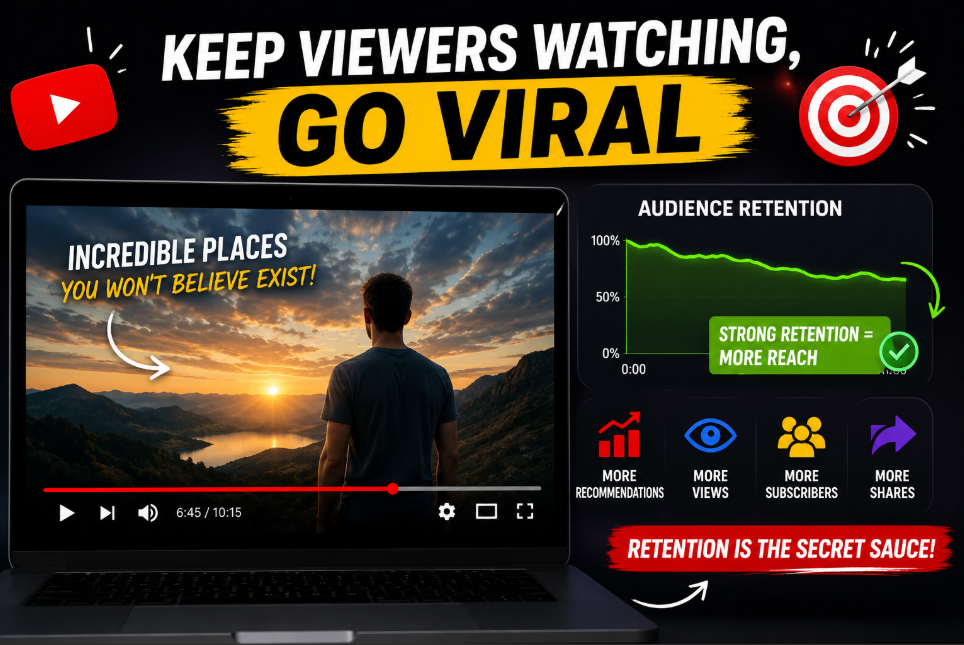
More than 3.9 million videos are uploaded to YouTube every day, yet only a small percentage gain serious traction. Viral videos rarely happen by accident.
Most successful creators follow patterns that increase click-through rates, retention, engagement, and recommendation reach. A video with strong editing can still fail if nobody clicks it or viewers leave after 20 seconds.
We tested growth strategies across different YouTube niches for years, and certain tactics repeatedly separate low-performing videos from videos that explode across recommendations and Shorts feeds.
How to Make a YouTube Video Go Viral
Viral videos rarely happen by luck alone. Creators usually follow specific patterns that increase clicks, watch time, shares, and recommendation reach across YouTube.
Viral Videos Usually Trigger Emotion
People share videos because they feel something immediately. Strong emotional triggers include:
-
Surprise
-
Curiosity
-
Shock
-
Excitement
-
Anger
-
Inspiration
-
Humor
-
Fear of missing out
A calm informational video can still succeed, but viral videos often create fast emotional reactions within the first few seconds.
For example:
-
“I Tried MrBeast’s Diet for 30 Days”
-
“I Lost $50,000 in Crypto Overnight”
-
“I Survived on $1 Per Day”
-
“This Tiny Channel Made $100K”
Each title creates immediate curiosity or emotional tension.
YouTube also explains that viewer satisfaction and watch behavior heavily affect recommendation reach across the platform.
Strong Hooks Matter More Than Intros
Most viewers decide very quickly if they will continue watching. Long greetings destroy momentum:
-
“Hey guys, welcome back”
-
long logo animations
-
unrelated talking
-
slow setup explanations
Those habits kill retention early.
Instead, successful creators open with:
-
a dramatic result
-
a bold statement
-
a shocking clip
-
a fast preview
-
immediate conflict
A fitness creator might say:
“I gained 18 pounds in 30 days because I followed the worst celebrity diet online.”
That approach creates tension immediately.
Research from Wistia’s Audience Retention guide shows that engagement loss appears early in a video, especially when the opening fails to hold attention, which is why strong hooks matter more than long intros.
Thumbnails Decide Everything
Many creators spend 10 hours editing and only 5 minutes on thumbnails. That mistake destroys reach. YouTube first tests:
-
click-through rate
-
viewer interest
-
initial engagement
before wider distribution starts.
A weak thumbnail limits impressions because viewers ignore the video inside browse feeds. Strong thumbnails usually contain:
-
high contrast
-
clear emotion
-
minimal text
-
obvious subject focus
-
visual curiosity
Weak thumbnails usually contain:
-
clutter
-
tiny unreadable text
-
poor lighting
-
too many elements
-
confusing compositions
One gaming creator we tracked improved click-through rate from 2.3% to 7.1% after redesigning thumbnails across older uploads.
Several videos tripled their traffic within weeks without content changes.
YouTube explains in its official impressions and click-through rate documentation that thumbnails and titles directly affect how viewers respond to impressions, which is why stronger click-through rates often lead to wider distribution.
Viral Videos Usually Keep People Watching
Watch time matters heavily.
A viral video with weak retention rarely sustains momentum for long because YouTube notices exits quickly. Good creators constantly remove:
-
dead space
-
repetitive dialogue
-
unnecessary pauses
-
slow transitions
-
filler explanations
Fast pacing often improves retention dramatically.
Strong retention benchmarks:
|
Video Length |
Strong Retention |
|
4 minutes |
65%+ |
|
8 minutes |
55%+ |
|
15 minutes |
45%+ |
One finance creator shortened average intro length from 42 seconds to 11 seconds. Average view duration increased by almost 37%.
YouTube analytics regularly show retention spikes during:
-
dramatic moments
-
emotional reveals
-
fast transitions
-
storytelling shifts
Storytelling Makes Videos Easier to Watch
Even educational videos need structure.
Many creators simply explain information without creating narrative progression. Viral content usually follows movement:
-
challenge
-
conflict
-
tension
-
progress
-
result
For example:
Bad structure:
“Today I’ll explain how affiliate marketing works.”
Better structure:
“I tried affiliate marketing for 90 days with zero audience and nearly lost money before one strategy changed everything.”
The second version creates anticipation.
Documentary channels use storytelling heavily because viewers stay longer when tension builds gradually.
Research published by Harvard Business Review explains that stories increase emotional connection and audience attention more effectively than raw information alone.
Timing Plays a Bigger Role Than People Think
Some topics explode because creators upload at the perfect moment. Trend timing matters heavily for:
-
celebrity news
-
gaming updates
-
product launches
-
sports highlights
-
music releases
-
viral drama
-
platform changes
Late uploads often miss recommendation waves completely.
For example:
A creator who uploads a reaction video 30 minutes after major gaming news often performs much better than someone who uploads the same topic 3 days later.
Google Trends helps identify rising search interest before competition floods the topic.
Creators who react quickly often gain:
-
search traffic
-
homepage impressions
-
suggested video placements
-
Shorts exposure
Shorts Can Create Viral Momentum Fast
YouTube Shorts changed growth completely. Many channels now gain millions of views through Shorts before long-form content grows.
Strong Shorts usually:
-
move quickly
-
cut aggressively
-
start instantly
-
avoid filler
-
create loops
-
hold attention
Shorts under 35 seconds often perform especially well because viewers rewatch them automatically.
YouTube explained in its official Shorts monetization update that YouTube Shorts now average more than 70 billion daily views, which shows how much discovery potential short-form content creates for smaller creators.
That volume creates huge discovery potential for smaller creators. One podcast creator increased subscriber growth by nearly 400% after posting:
-
2 long videos weekly
-
4 Shorts clips daily
-
1 viral highlight clip every weekend
Short-form content now acts as a traffic funnel for larger videos.
Early Engagement Helps Videos Spread Faster
YouTube watches viewer behavior closely during the first hours after upload. Strong early signals include:
-
comments
-
likes
-
shares
-
watch time
-
replay activity
-
subscriber conversion
Videos with active audiences often receive stronger distribution.
Creators who disappear after publishing often lose momentum because audience interaction slows down.
We usually recommend:
-
replying to comments early
-
pinning discussion questions
-
sharing clips across platforms
-
pushing launch-day activity
New channels often struggle because videos look inactive during the early stages.
Many creators use our service to buy YouTube views when they want stronger momentum around uploads, product releases, music videos, or podcast launches.
Natural delivery matters heavily here. Sudden spikes often look suspicious, so we focus on gradual drip-feed activity instead of unrealistic instant traffic surges. Stable engagement patterns usually look much healthier long-term.
Collaboration Creates Faster Exposure
Many viral creators grow through collaboration networks. One appearance on the right channel can completely change audience reach.
Strong collaboration formats include:
-
interviews
-
challenge videos
-
reaction swaps
-
podcasts
-
debates
-
live streams
Smaller creators often ignore collaborations because they focus only on subscriber counts. Audience overlap matters more than raw size.
A 20,000-subscriber creator inside your niche often delivers better conversion than a random million-subscriber channel with unrelated viewers.
One tech reviewer gained over 60,000 subscribers after appearing in several creator comparison videos during a new smartphone launch week.
Controversy Often Increases Views
Controversy creates clicks because conflict attracts attention. Still, creators must handle controversy carefully.
Good controversy:
-
strong opinions
-
unpopular takes
-
heated debates
-
industry criticism
-
competitive comparisons
Bad controversy:
-
fake drama
-
offensive behavior
-
misleading claims
-
harmful content
For example:
“Why Most Productivity Advice Fails”
creates more curiosity than:
“My Productivity Tips.”
Strong opinions increase comments because audiences react emotionally.
Many commentary channels rely heavily on disagreement-driven engagement because comments help recommendation activity.
Packaging Matters More Than Video Quality
Many creators believe expensive cameras create viral success. Packaging usually matters more. Packaging includes:
-
title
-
thumbnail
-
hook
-
topic angle
A perfectly edited video with weak packaging often fails. Meanwhile, lower-budget videos with strong concepts sometimes reach millions.
MrBeast repeatedly discussed this idea during interviews and creator podcasts. Great ideas attract clicks before viewers ever judge production quality.
Strong title examples:
|
Weak Title |
Stronger Title |
|
My Gym Journey |
I Trained Like a UFC Fighter for 30 Days |
|
Minecraft Video |
I Survived 100 Days Underground |
|
My Budget Setup |
My $200 Setup Beat a $5,000 Gaming PC |
Better packaging creates curiosity immediately.
Viral Videos Usually Stay Simple
Complicated ideas often hurt performance. Viewers understand simple concepts faster.
Good viral ideas:
-
one challenge
-
one transformation
-
one experiment
-
one comparison
-
one clear question
For example:
“I Ate Only Gas Station Food for a Week”
works better than:
“My Thoughts on Modern Food Culture.”
Simple ideas spread faster because audiences instantly understand them.
Consistency Still Matters
One viral video helps, but consistency builds channels. Many creators disappear after one successful upload because they cannot repeat momentum.
Strong creators study:
-
audience behavior
-
retention patterns
-
click-through rates
-
returning viewers
-
topic performance
Then they repeat successful structures without copying themselves directly.
Channels with regular uploads often receive more recommendation stability because YouTube trusts active creators more over time.
Conclusion
Viral YouTube videos usually follow predictable patterns.
Strong hooks, emotional reactions, better thumbnails, higher retention, trend timing, audience interaction, and clear storytelling all increase recommendation potential.
Most creators focus too heavily on editing while ignoring packaging and viewer psychology. A simple video with strong curiosity often beats expensive production with weak structure.
We built our growth service around one major problem many creators face early: lack of visible momentum. Strong engagement and steady traffic can help good content gain traction faster, especially during the critical first hours after upload.
Viral success still depends on content quality and audience interest, but smart strategy dramatically improves the odds.
Frequently Asked Questions
How many views count as viral on YouTube?
Numbers vary by niche and channel size. A small creator might consider 100,000 views viral, while large creators may only view million-plus traffic as viral performance.
Relative growth matters more than raw numbers.
Do YouTube Shorts go viral more easily than long videos?
Yes. YouTube Shorts often spread much faster because viewers scroll rapidly and replay rates stay high. Long-form videos usually create stronger subscriber loyalty and higher revenue, though.
Can old YouTube videos suddenly go viral?
Yes. Search trends, algorithm shifts, news events, and creator shoutouts can revive older videos months or even years later. Evergreen content often experiences delayed traffic spikes.
How often should you upload on YouTube for growth?
Most growing channels upload at least one to three long videos weekly while also posting Shorts regularly. Consistent schedules usually perform better than random uploads.